
The building was a pit. With its peeling red paint, warped walls, exposed insulation, and piles of debris scattered across the concrete floor, the Quonset-style structure looked more like a ramshackle aircraft hanger than a place where circular economy innovation could flourish. But beneath the decay, Daniel Raab and the small ReSurf team saw possibility. Armed with grant funding and a handful of industrial sewing machines, they slowly transformed the battered structure into Canada’s first large-scale surf gear repair and recycling initiative.
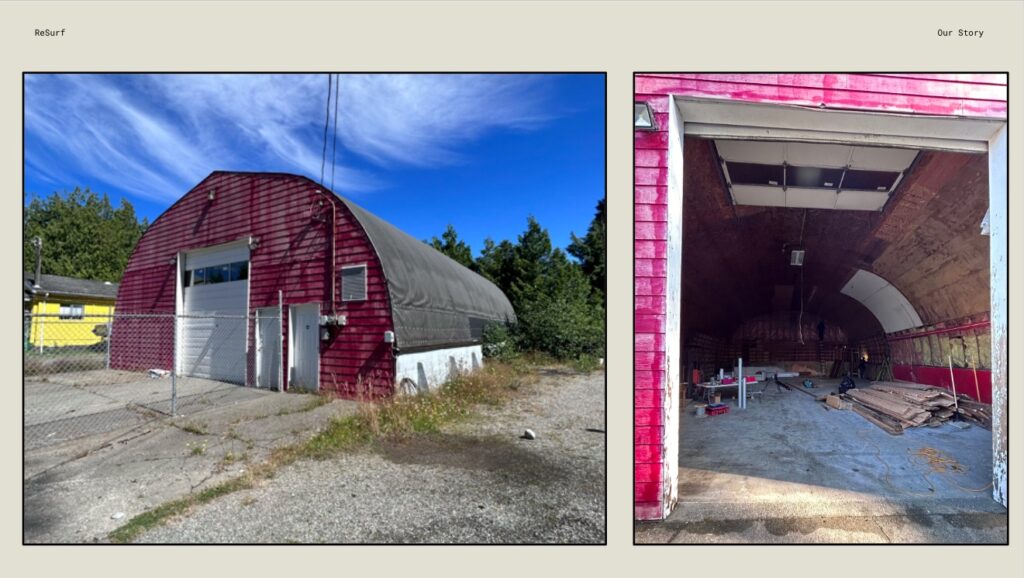
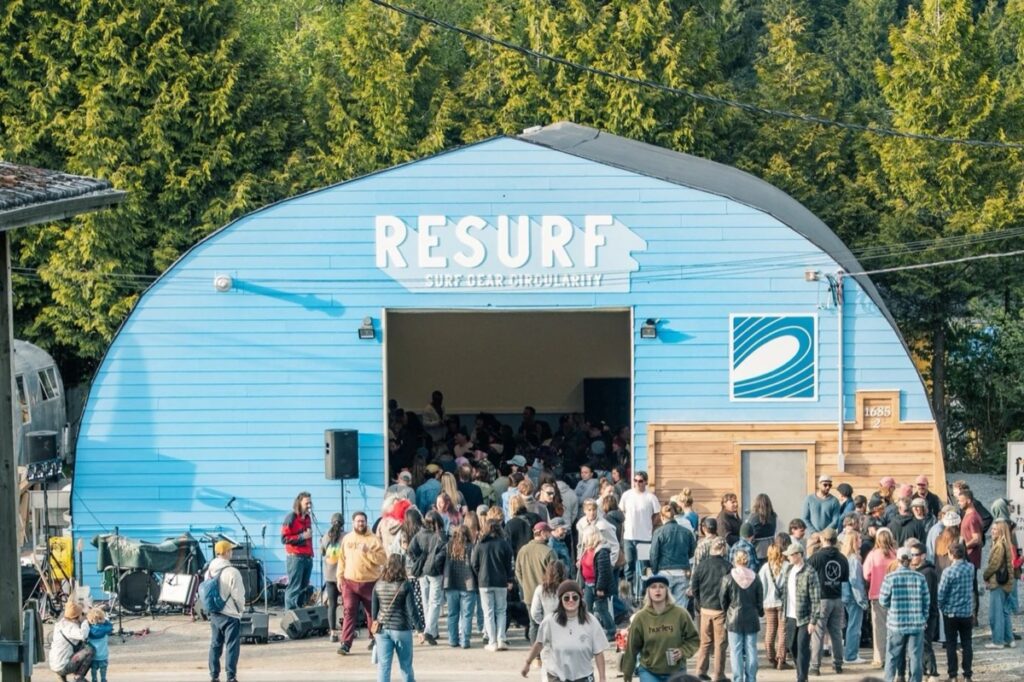
ReSurf was officially launched on May 8, 2025 in that renovated building located in the heart of the tiny community of Ucluelet on the west coast of Vancouver Island. And in less than a year, the organization has reshaped how the entire country thinks about outdoor gear waste, repair culture, and circular manufacturing.
In the latest KORE Outdoors Speaker Series webinar, Program Manager Daniel Raab shared ReSurf’s ambitious vision for keeping wetsuits and surfboards out of Canadian landfills. Broadcasting from that once-derelict building and surrounded by stacks of old wetsuits, he explained everything about ReSurf: how it’s operated through the Surfrider Foundation Canada; it’s exceptionally rapid growth; and the unexpected challenges of building the program from scratch. He also outlined why repair infrastructure may become one of the outdoor industry’s biggest opportunities over the next decade. Below is a summary of Daniel’s presentation.
A Program Born from a Pile of Old Wetsuits
Like many successful sustainability projects, ReSurf started with a very obvious problem. Danil explained that surf shops across the west coast of Vancouver Island were overflowing with damaged wetsuits and broken foam surfboards. Most ended up in landfills simply because no alternative existed.
What began as an idea for a small shipping container collection project quickly escalated after ReSurf successfully secured funding through the federal Plastic Action Fund. Instead of a modest pilot program, the grant allowed the organization to lease and renovate a full industrial facility in Ucluelet and launch a national-scale initiative. “There wasn’t infrastructure in place that we were able to copy or innovate from,” Raab explained during the webinar. “We had to start from scratch for a lot of these processes.” That included gutting the building that would become ReSurf’s headquarters and transforming it into a fully operational repair and recycling centre complete with industrial sewing machines, sorting stations, shredders, and material storage.
Today, less than a year after opening its doors, the 2,500-square-foot facility is already nearing capacity.
Why Wetsuits Are Such a Big Problem
One of the most eye-opening parts of the presentation was hearing just how difficult wetsuits and EPS foam surfboards are to deal with at end-of-life. Both are made from petroleum and are non-biodegradable. Unlike materials such as aluminum or cardboard, there are no established recycling pathways for neoprene or expanded polystyrene in Canada.
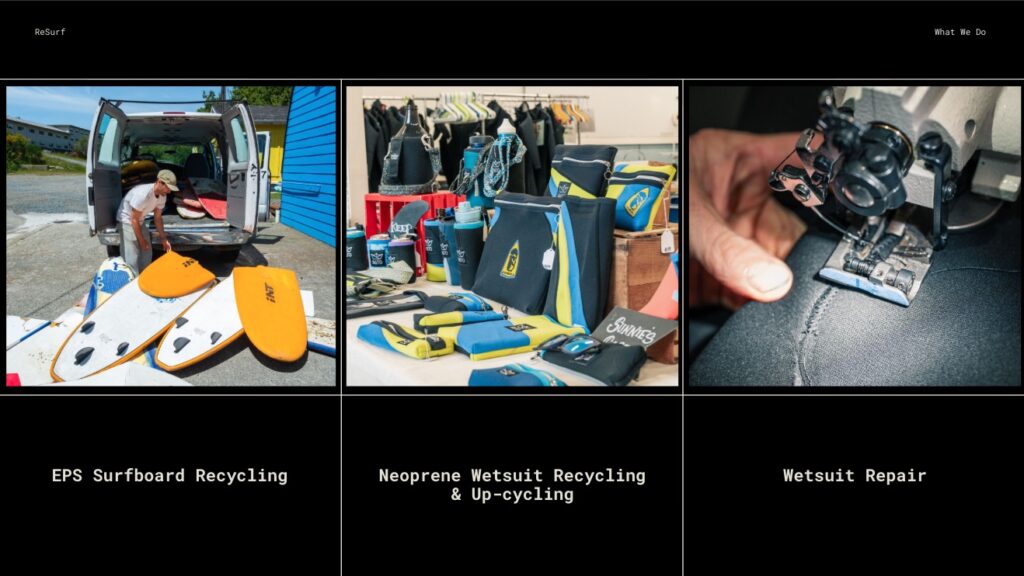
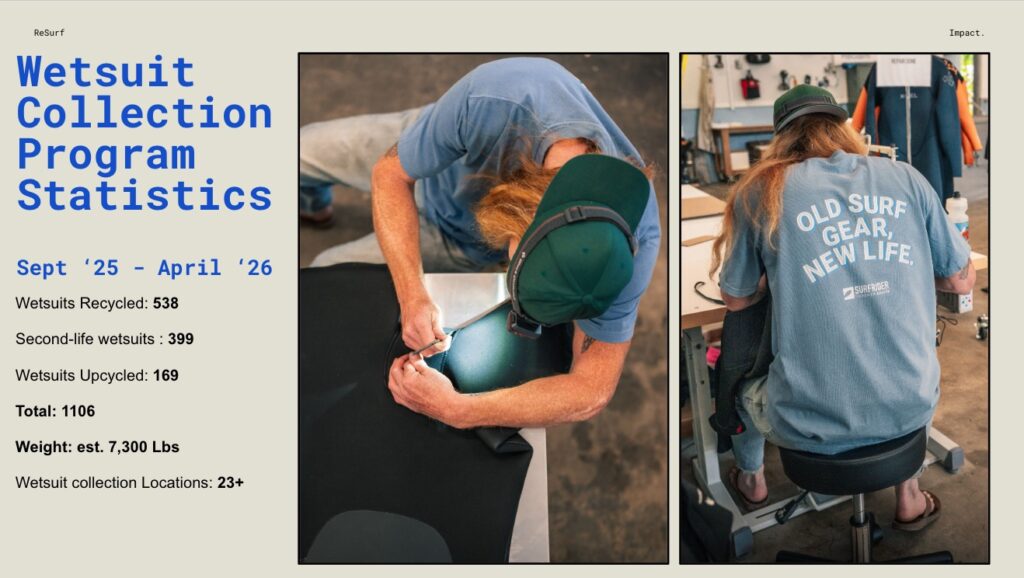
Daniel explained that surf communities like Ucluelet and Tofino generate enormous amounts of surf-related waste due to the popularity of rental fleets and beginner foam boards. Many soft-top boards only last a season or two before becoming unusable. When ReSurf first opened, the team collected roughly 500 wetsuits and 50 surfboards within just a few days. “It goes to show how many people were excited to offload these items that they had,” said Daniel.
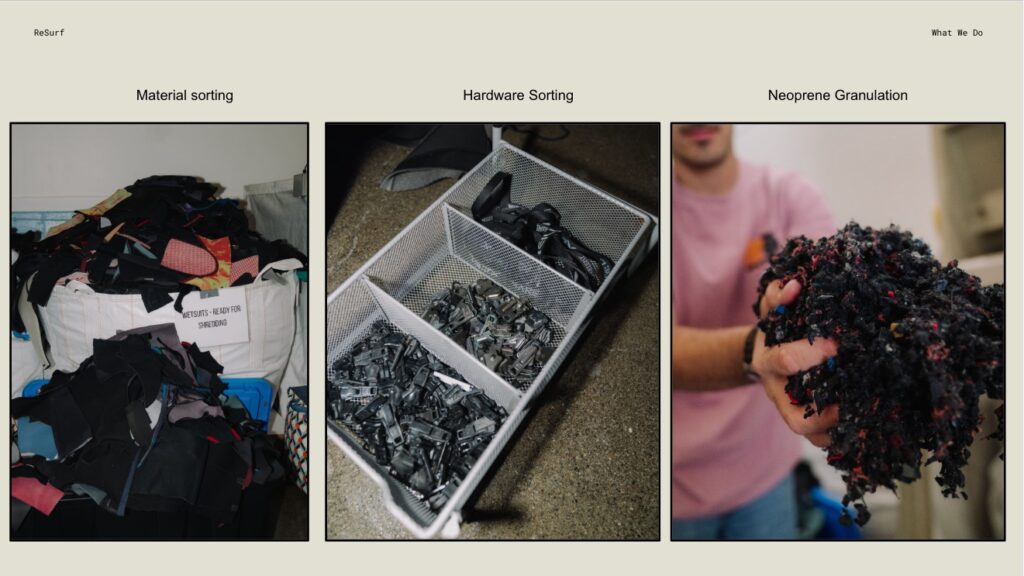
Rather than simply shipping the material elsewhere, ReSurf developed systems to dismantle and process it themselves. EPS boards are stripped apart by hand so the foam, plastic layers, and wood stringers can each be separated. The organization can currently recycle approximately 85 to 90 percent of a typical soft-top surfboard. The wetsuit process is even more labour intensive. Metal zippers, straps, buckles, and hardware are removed before the neoprene is cut into smaller pieces and fed through a modified tire granulator. The shredded neoprene is then stored for ongoing experimentation and material development.
Repair First, Recycling Second
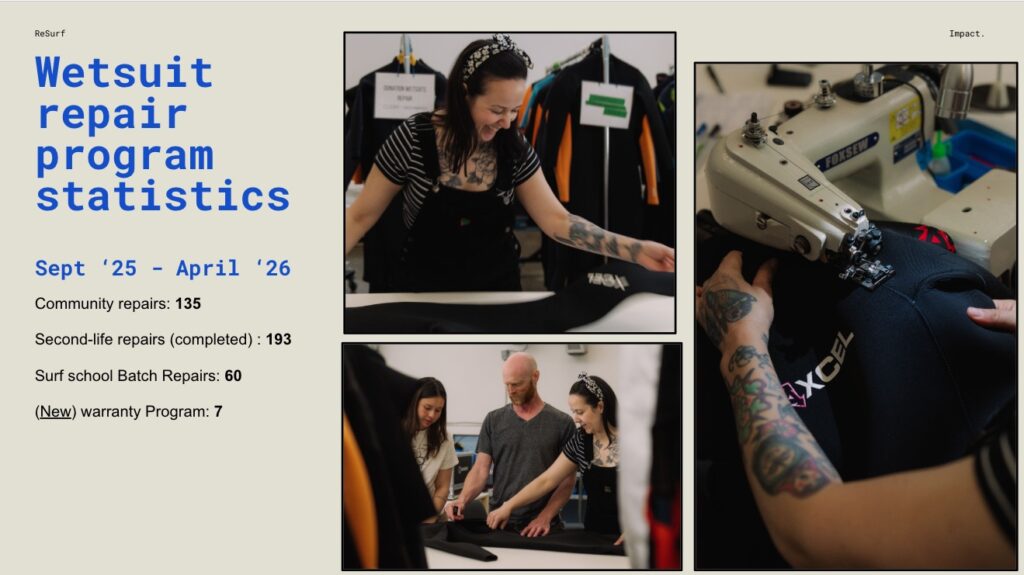
While recycling receives plenty of attention, ReSurf’s repair division may actually be the heart of the operation. Daniel emphasized that a surprising percentage of wetsuits arriving at the facility are still repairable. Those suits are fixed by ReSurf’s technicians and resold at affordable prices, often for less than $200.
The organization also operates a growing mail-in repair service that accepts suits from across Canada, alongside batch repair contracts for surf schools and rental operations.
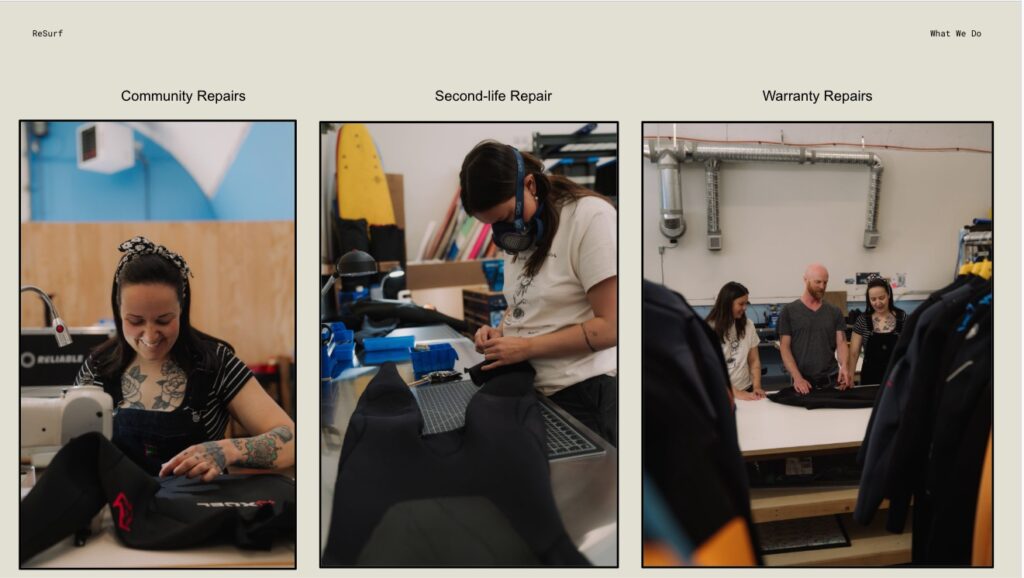
Perhaps most interesting for many KORE members was ReSurf’s emerging role as a warranty repair hub for major surf brands. Prior to the program’s launch, most Canadian warranty wetsuits were shipped to California for repairs. Now companies including Xcel, Billabong, Manera, and Vissla are partnering with ReSurf to complete those repairs domestically. The benefits are substantial: lower shipping costs, faster turnaround times, reduced emissions, and less gear ending up discarded unnecessarily. “A lot of brands that we are working with, there wasn’t even a warranty program, they would just replace the suit,” said Raab. “Which is great for the customer, but it’s not great for the environment.”
The operation currently runs with just three full-time technicians, all coming from diverse sewing and manufacturing backgrounds, including experience in sailmaking and technical apparel production.
The Experimental Side of Circularity
One of the recurring themes throughout the webinar was experimentation. Daniel repeatedly described ReSurf as a giant real-world research and development project. The organization is actively testing ways to pelletize neoprene, blend it into new plastic products, and potentially create material suitable for 3D printing applications. The work remains highly experimental, but that uncertainty is also part of what makes the project exciting. “We’re sort of vanguarding this approach in a way,” Daniel said. “It’s always great to learn something new and then share it with the world.”
The organization is also pursuing longer-term policy goals, including landfill diversion bans for neoprene and EPS foam and the development of Extended Producer Responsibility models that would financially support recycling infrastructure. For KORE members, the parallels to the broader outdoor industry were hard to miss.
A Model Bigger Than Surfing
By the end of the webinar, it became clear that ReSurf is about more than wetsuits. Daniel repeatedly emphasized that the organization hopes its systems can eventually inspire repair and recycling infrastructure across the entire outdoor recreation sector.
That alignment with KORE Outdoors became even more apparent during the discussion around future partnerships. Daniel confirmed that KORE is expected to become ReSurf’s first interior BC wetsuit collection location, helping divert neoprene from the Kootenays and expanding the program beyond coastal communities.
ReSurf will also be bringing its new mobile repair trailer to the upcoming Outdoor Recreation Council of British Columbia conference in Kamloops alongside KORE’s own repair initiatives.
For an industry increasingly focused on sustainability, repairability, and circular design, ReSurf offers an example of what happens when an organization stops waiting for infrastructure to appear and simply starts building it themselves. And judging by the piles of wetsuits already flowing through their doors, Canadians were more than ready for someone to do exactly that.