What I loved most about Chris Stone’s recent Speaker Series presentation was his unapologetic stoke for the little guy. Having spent my career rejecting roles at large media houses in favour of small, independent firms where I had to rock many different hats, I completely understood why Chris did what he did earlier this year. Until last December, he was living in Denver, Colorado and working as a designer at The North Face, one of the largest outdoor gear companies in the world with over 5,000 employees and an estimated revenue of $3.7 billion. Then, in January, he took a job at the small Durston Gear company in Golden, a town located at the base of the Rocky Mountains in British Columbia. It has two traffic lights.
During his 50-minute long webinar, Chris detailed his career path to date. He also walked attendees through the experiences that shaped his approach to product design, the lessons he learned at both large and small companies, and why he ultimately believes the future of innovation in outdoor gear may lie with smaller brands willing to take risks. This is a summary of the presentation.
Three Lenses for Building a Career
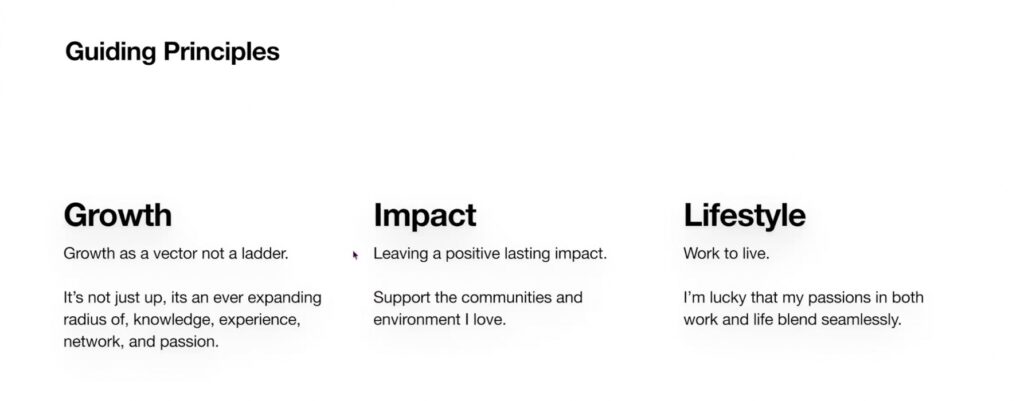
Early in his talk, Chris introduced the three principles that guide how he makes career decisions: growth, impact, and lifestyle.
In terms of growth, Chris stressed that he wasn’t talking about climbing the corporate ladder. “Titles don’t matter too much to me,” he said. “Mostly I’m looking at expanding my radius of knowledge, experience, my network, and kind of trying to figure out different passions and whatnot.”
The second lens is impact. For Chris, design is not only about creating products but about helping people get outside and ensuring the work contributes positively to both communities and the environment.
The final lens is lifestyle. Stone’s personal passions are tightly connected to his work. “I do work to live,” he said. “I’m super lucky to be able to blend my passions outside of work with my work itself.” To that end, when he is not prototyping gear, indoors, he’s often te outdoors “backpacking, mountain biking, and putting all sorts of gear to the test.” Together, these three lenses have guided the choices that shaped his career.
Starting in a Small Workshop
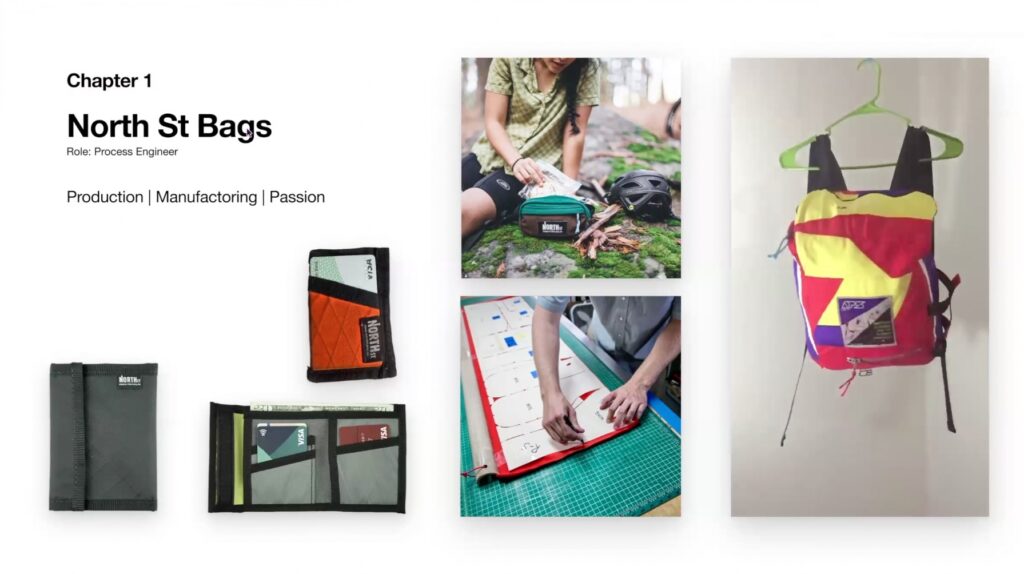
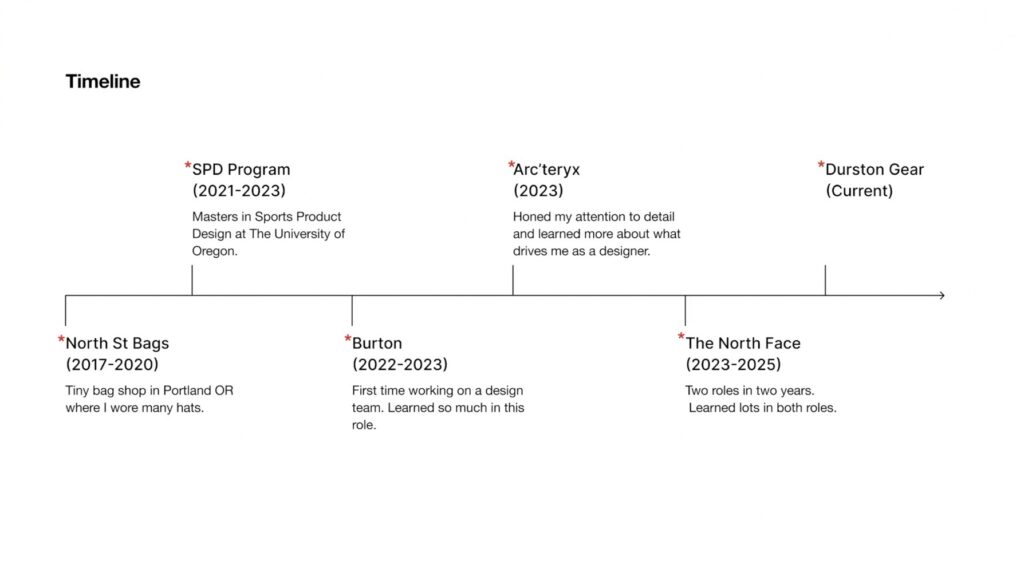
Chris’s first exposure to product design came unexpectedly. After completing an undergraduate degree in environmental studies, he moved to Portland, Oregon, a city known for its design culture. There he found a job at North Street Bags cutting fabric on the production line. “At the time, I thought that was just a job to pay the bills,” he said. “But little did I know that it would lead to pretty much everything we’re gonna go through today.”
The company was small, which meant Stone had the opportunity to see the entire production process in action, which allowed him to develop practical skills quickly. Without any formal design training at the time, he learned by working directly with materials and machinery. “It was a really great place to get my hands dirty and learn how product goes from raw good to finished functional design,” he said. Eventually he even began designing small items himself, including wallets, one of which he still uses today.
Building a Foundation in Design
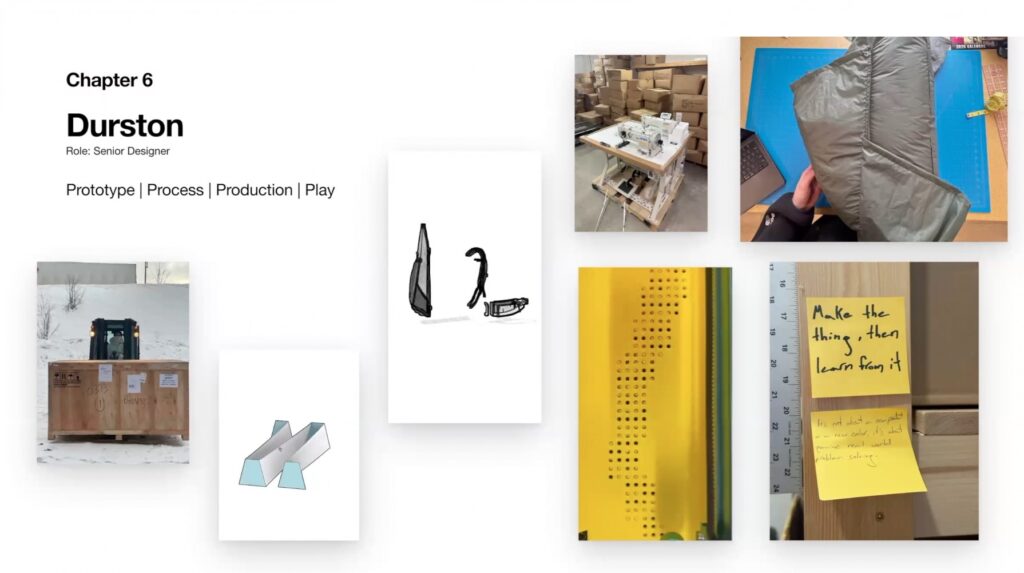
After his experience at North Street Bags, Chris decided to pursue formal training in product design. He enrolled in a master’s program in Sports Product Design at the University of Oregon, where he developed the technical foundation that would launch his career. The program emphasized experimentation and prototyping and students were encouraged to move quickly from ideas to physical objects. “They kind of gave us this playground to workshop blue sky ideas (and) bounce ideas off each other,” He said.
With access to tools such as industrial sewing machines, 3D printers, laser cutters, and heat presses, students could test concepts in a well-equipped prototyping lab. “We had all the things to take our idea basically out of our head, put it on paper, and then make it physical.” That approach became central to his design philosophy.
Lessons From the Industry’s Biggest Brands
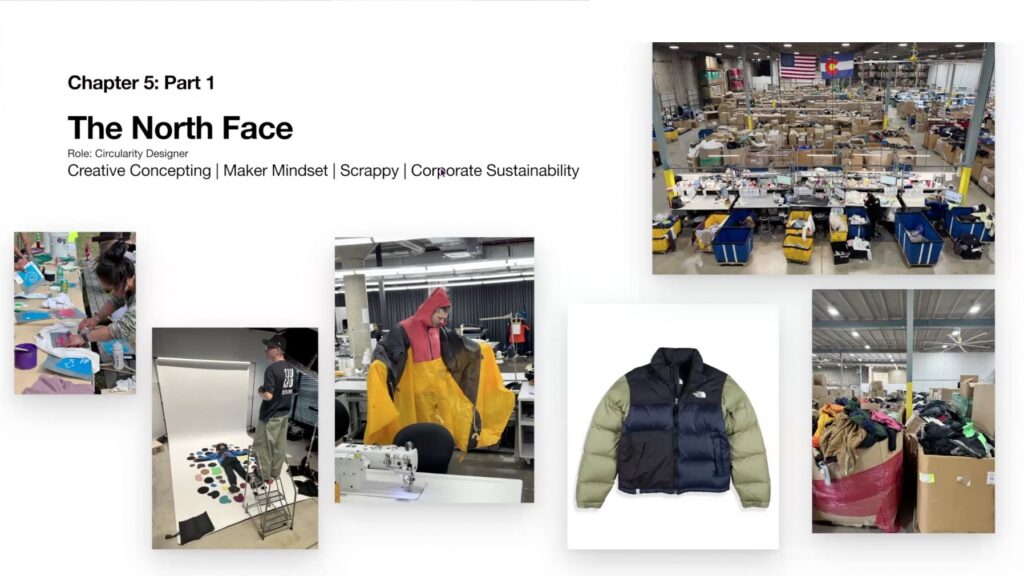
After graduate school, Chris began working with some of the outdoor industry’s most recognizable companies, including Burton, Arc’teryx, and The North Face. At Burton he worked as a 3D technical design intern, helping teams integrate digital garment tools into their design process. At Arc’teryx he helped create digital “twins” of garments that allowed teams to evaluate products before physical prototypes were produced. Later, at The North Face, he worked in a circular design role that focused on repairing and reimagining used gear.
The experience exposed him to the scale and coordination required inside global outdoor brands. “One of the biggest learnings for me was basically how teams operate cross-functionally,” he explained. “It was my first time sitting on a team that worked with the development team, that worked with the graphics team, that worked with the creative direction team.”
Despite the impressive resources available at these companies, Chris eventually began to feel constrained by the structured processes that come with large organizations. “Everything’s very formulaic,” he said, describing the limitations that can arise when companies operate at a global scale. For someone who enjoyed hands-on experimentation, he started thinking he’d need something different.
Why Small Brands Offer Creative Freedom
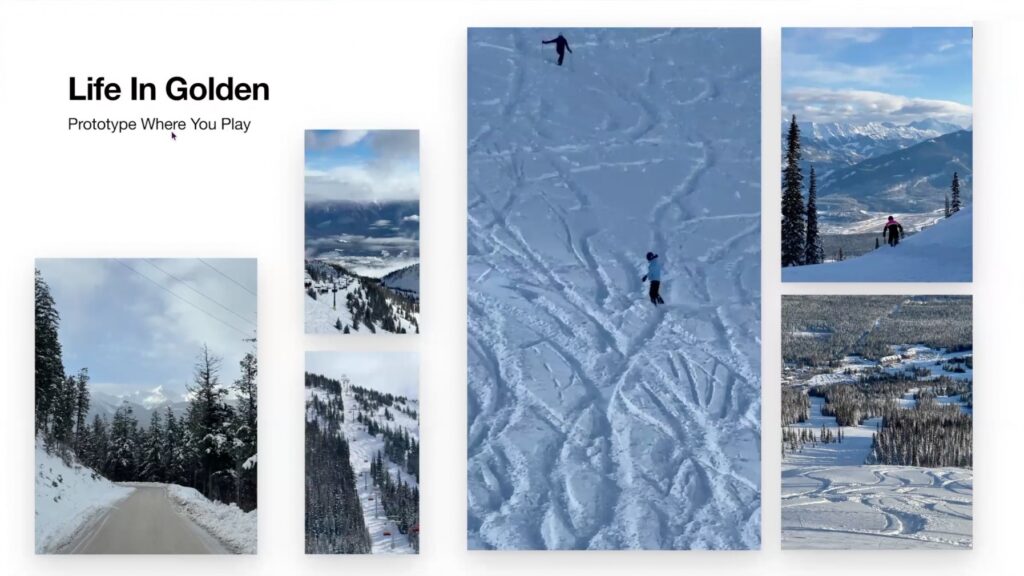
Stone eventually began speaking with ultralight gear designer Dan Durston, founder of Durston Gear in Golden, BC. At first, the conversations were informal. Stone was simply offering advice about building an in-house design workspace. But over time, those conversations evolved into an opportunity to join the company. The appeal of a small brand was immediate. “My dad owned a small business (so) I’ve always thought small business is awesome,” Chris said.
For him, cottage brands represent a different kind of design environment. Without massive production volumes or rigid corporate structures, small companies are often willing to experiment. “The product they put out is risky, in the best way possible,” he explained. “It’s innovative, and it’s usually something that the market hasn’t seen yet.” That willingness to try new ideas was exactly what Stone was looking for and so he decided to leave his job with The North Face and move from Denver, Colorado to Golden.
The move also aligned with his belief that outdoor gear should be designed in close connection with the environments where it will be used. Working for Durston Gear allows him to prototype equipment and immediately test it in the mountains surrounding the town. This constant feedback loop between design and real-world use helps refine products quickly and ensures they perform under real conditions.
For a designer who values growth, impact, and lifestyle, the combination of creative freedom and mountain access makes the small-company environment particularly appealing.
Chris finished by reflecting that his career in the outdoor industry has been anything but linear, yet every step ultimately led him to a place where he can design innovative gear in the mountains that inspire it.