
Before sitting down to write this, I noticed the weather forecast called for record highs of +16°C across much of the Kootenay region over the course of the next week. That wouldn’t be cause for concern if this was May but the date is February 28. February! When I first moved to this area two decades ago, late February was prime ski time that featured longer days and excellent snow. Now it’s time to get the bike out of storage.
It’s no secret we all need to make changes if we want to maintain some semblance of winter in the Northern Hemisphere and that includes the outdoor industry. For half a century we’ve subscribed to the “take – make – waste” business ethic and the negative environmental results are now evident. Adopting a more sustainable model is crucial and no one knows that better than Ali Wines, the former executive director of Protect Our Winters (POW) Canada. But how to go about doing it?
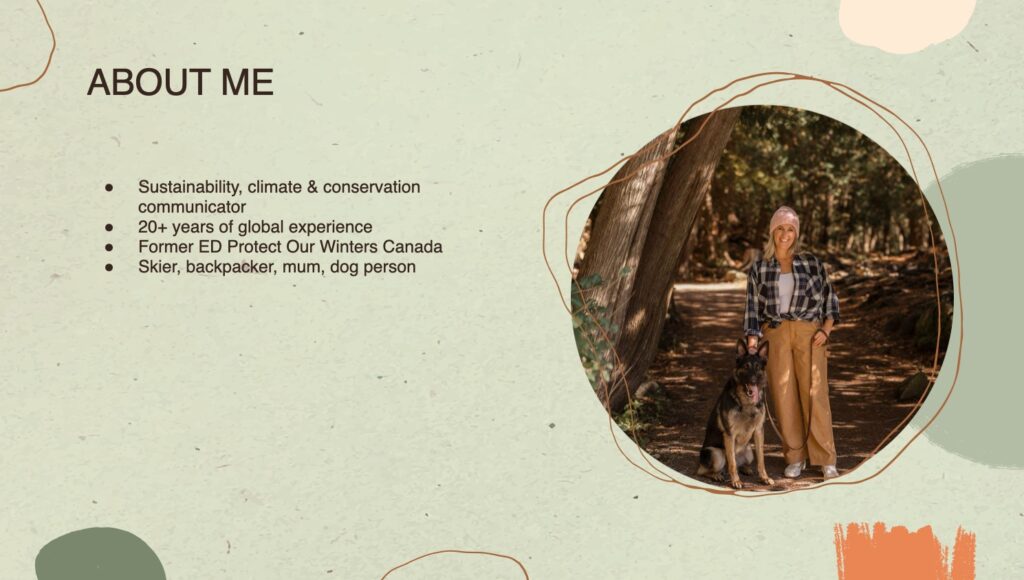
At the recent KORE Outdoors Speaker Series, Ali stressed the key to a full system change is to begin by talking about sustainability and then keep talking about it. She recognizes it can be overwhelming to pinpoint ways of implementing different strategies but if we at least start having conversations about it, pathways will become evident. And she knows what she’s talking about. Born in Australia and now based in Canada, Ali has spent her career working in climate advocacy, communications strategy, and the outdoor industry. Her primary role with POW was to mobilize the outdoor community to advocate for climate solutions and she is also the founder of Uncommon Ground, a communications agency that works with brands and nonprofits that are focused on sustainability, climate, and environmental action.
Ali started her presentation by sharing current challenges for the outdoor industry, which include inflation, political polarization, and growing skepticism toward corporate messaging. Yet consumers say they care about sustainability so how should companies communicate their values effectively? She then offered a practical roadmap rooted in trust, authenticity, and storytelling. Here are five key themes from her presentation.
1. Yes, It’s a Confusing Moment for Sustainability
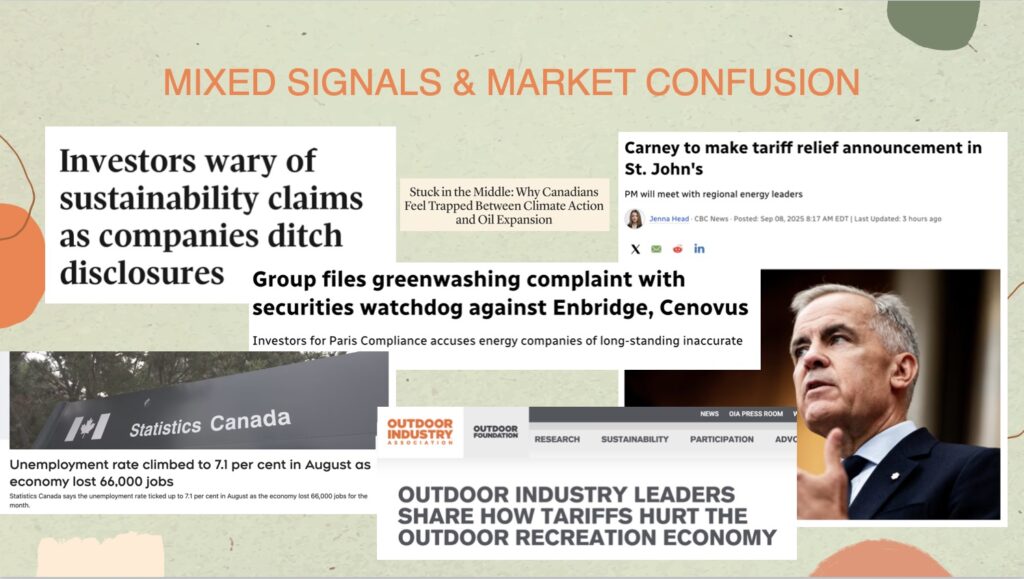
Ali acknowledges that sustainability messaging has become complicated. Headlines suggest the world is backing away from climate action and economic pressures have shifted consumer priorities toward affordability and job security. At the same time, trust in institutions, such as government, media, and corporations, has declined dramatically. One statistic she highlighted was particularly striking: nearly two thirds of people now believe businesses intentionally mislead consumers. In other words, we are operating in what Wines described as a “low-trust environment.”
For companies that genuinely care about sustainability, that presents both a challenge and an opportunity. Consumers are skeptical, but they are also searching for brands they can believe in. Businesses that communicate clearly and honestly can fill the trust gap left by larger companies that have damaged their credibility. In other words, authenticity is becoming a competitive advantage.
2. The Truth: People Still Care About Climate
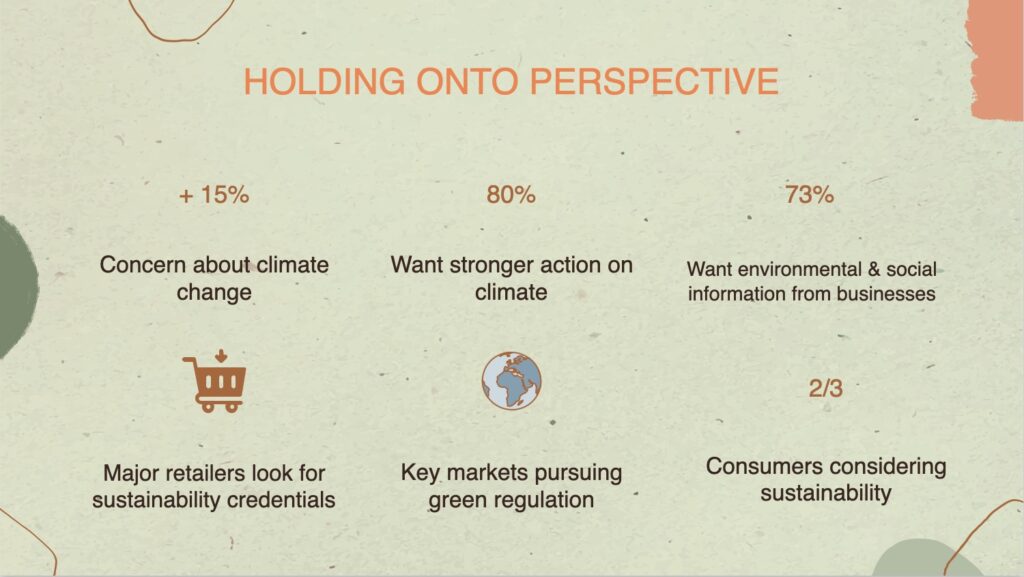
Despite the mixed signals, Ali emphasized that concern about climate change has not disappeared. In fact, global studies show that roughly 80 percent of people want stronger climate action. Many consumers simply assume that others care less than they do, which creates a “spiral of silence” where companies and individuals hesitate to speak up.
Within the outdoor industry, those numbers are even stronger. Ali shared findings from her own research showing that 90 to 95 percent of outdoor consumers consider sustainability when making purchasing decisions. That should not surprise anyone who spends time in wild places. In addition, regulation and market forces also continue to push the industry forward. European governments are tightening sustainability requirements, while major retailers like REI and MEC increasingly ask suppliers to document environmental practices. Even brands that are quieter about sustainability are still investing in it behind the scenes.
As Ali puts it: sustainability is not going away.
3. The Three Pillars of Effective Communication
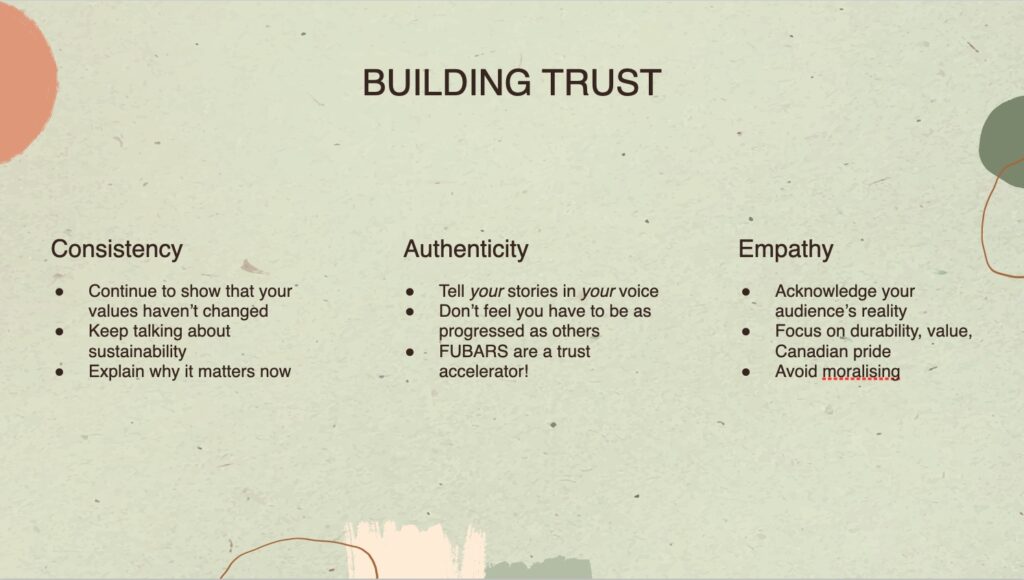
If sustainability still matters, the question becomes how to talk about it effectively. Ali recommends three core principles: consistency, authenticity, and empathy.
Consistency means sticking with your values even when the conversation becomes politically charged or economically difficult. When brands suddenly stop talking about sustainability or diversity initiatives, consumers notice. Trust erodes slowly but steadily when companies appear to abandon their principles.
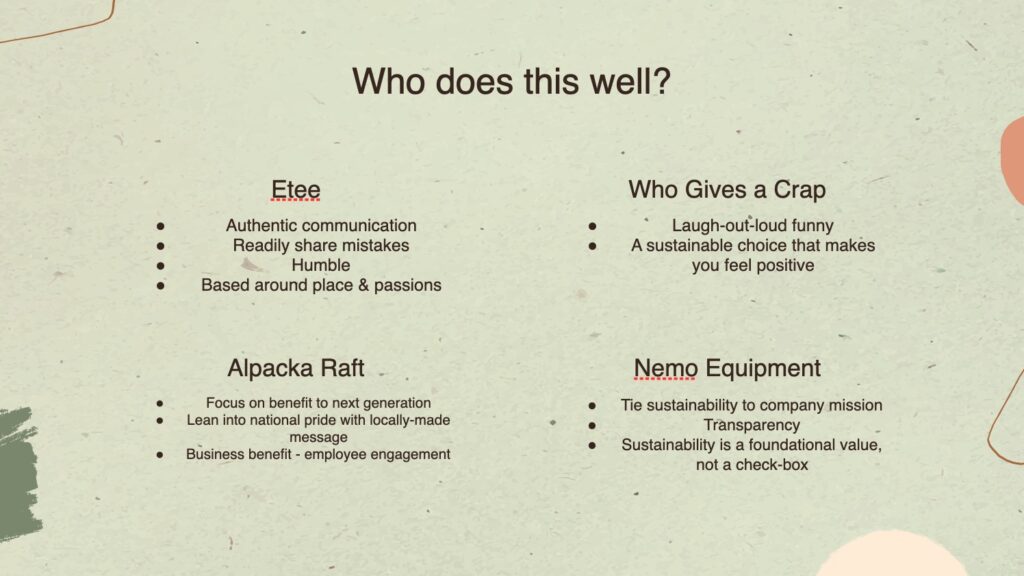
Authenticity means telling real stories rather than polished marketing narratives. Wines encouraged businesses to explain why sustainability matters to them personally. Founder stories, origin stories, and honest reflections on mistakes are far more compelling than sterile metrics about energy savings or carbon reductions.
The third pillar of “empathy” acknowledges the financial pressures many consumers face today. Sustainable products often last longer, are easier to repair, and ultimately offer better value. Communicating those benefits helps connect environmental values with everyday realities.
Together, these principles build trust over time.
4. Start With What People Actually Care About
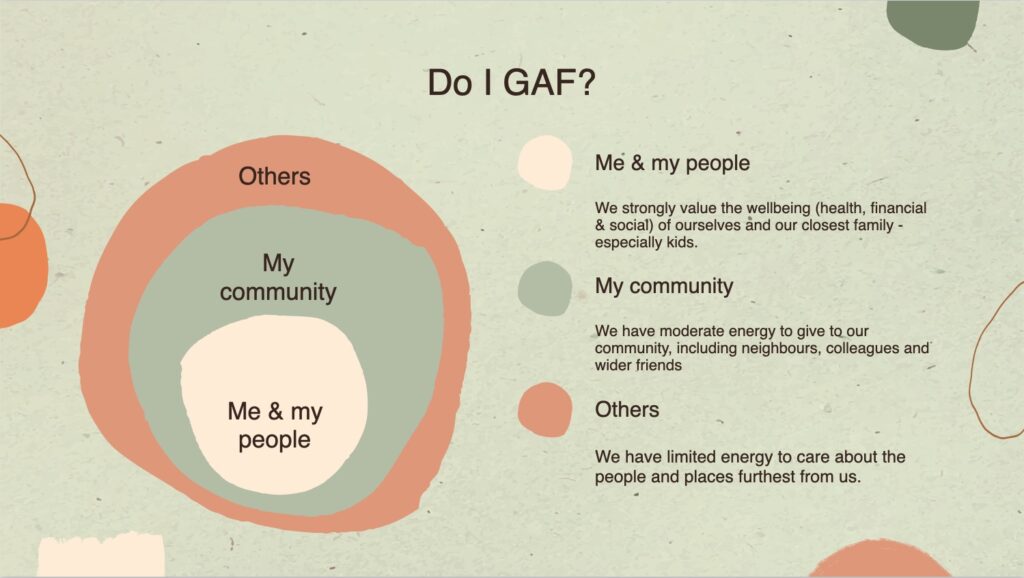
One of the most practical insights from Ali’s talk focused on what she jokingly called the “Do I give a frick?” test. When brands talk about saving the planet, the message often feels distant and abstract. Human beings tend to care about issues in expanding circles. First comes personal wellbeing and family. Next comes the local community. Only after that do we think about global issues like climate change.
This means effective sustainability messaging should start close to home. Instead of leading with abstract environmental concepts, connect the story to things people experience directly. That might mean protecting local rivers, preserving winter snowpacks for future generations, or supporting Canadian manufacturing.
When people can see themselves in the story, they are far more likely to care about the outcome.
5. Turning Sustainability Into a Story
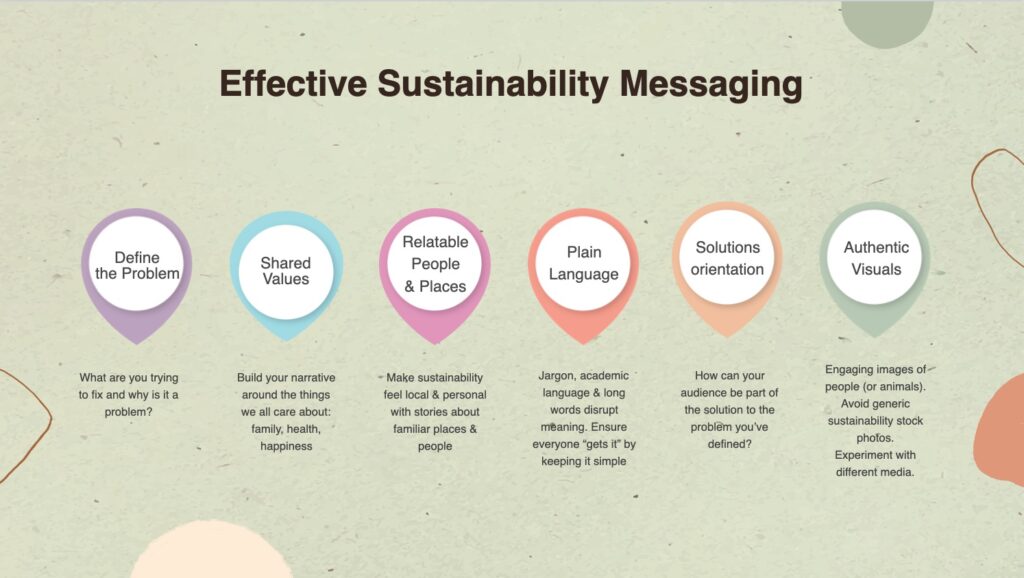
The next part of Ali’s presentation dealt with the mechanics of strong sustainability storytelling. She says the first step is to clearly define the problem your company is trying to address. Maybe it is reducing plastic waste, lowering transportation emissions, or designing gear that lasts longer.
Next, connect that problem to shared values. Family, community, health, and the desire to leave a better world for future generations are themes that resonate across audiences. She also emphasized the importance of relatable people and places. Images of distant polar bears once dominated climate campaigns, but today’s audiences respond more strongly to local stories and recognizable landscapes.
Finally, keep the language simple. Sustainability discussions often become bogged down in jargon and technical terms. Clear, accessible language helps people understand the issue quickly and reduces the mental effort required to engage with the message.
The goal is not just to inform consumers, but to invite them into a hopeful story about the future.
The Role of Small Outdoor Brands
Ali closed the presentation by sharing her own motivation for working in climate communications: the desire to protect the outdoor experiences she enjoys with her children.
For the Kootenay region’s growing community of gear makers, designers, and repair businesses, that perspective feels especially relevant. Many of the companies that make up the KORE network were founded by people who built their lives around the outdoors. Their values are already embedded in their products.
The challenge is simply telling their stories well. And in the current climate when consumers increasingly distrust large corporate messaging, small outdoor brands have an unexpected advantage. Their founders are visible. Their supply chains are shorter. Their connection to place is real.
As Ali reminded the audience, sustainability communication does not need to be complicated or perfect. It just needs to be honest, human, and grounded in the values that brought these businesses into existence in the first place.