
What compels someone to leave a dream job working for a respected outdoor apparel performance brand in Oslo, Norway, to take a high school teaching gig in Elkford, BC, population 2,749?
At the recent KORE Outdoors Speaker Series, Sara Lanyon spoke about her anything-but-standard career path from British Columbia to Europe and back again working for some of the world’s largest outdoor brands. After more than a decade designing apparel for companies such as MEC, Helly Hansen, and Norrøna, she made a deliberate pivot away from big-city design roles toward education and community-rooted work. In the hour-long webinar she spoke of her reasons for the change and in so doing, encouraged us to do a radical rethink of what success in the outdoor industry can look like.
Sara’s background is firmly rooted in apparel design, material science, and user-focused product development, but her current work is about something bigger: rebuilding the connection between making, place, and values. Speaking candidly about burnout, privilege, sustainability, and repair culture, she offered a compelling case for why the future of outdoor manufacturing might depend less on scale and speed, and more on skills, community, and care. The following are some of the main points from her presentation.
1. Designing with Values, Not Just Metrics
One of the strongest through-lines in Sara’s presentation was the tension between values-driven design and the realities of large-scale apparel production. Early in her career at MEC, she described being immersed in a culture that emphasized access, repair, and environmental responsibility. Working directly with field testers and users shaped her design process, grounding decisions in real-world performance rather than abstract trend cycles.
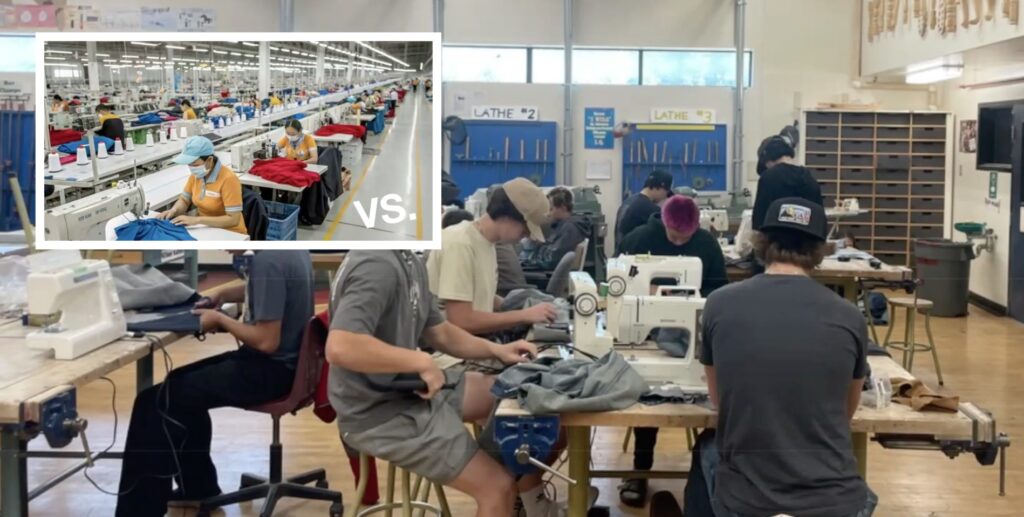
But as her career progressed, cracks began to show. Sara spoke honestly about the discomfort of overproduction, the distance between designers and factory workers, and the constant pressure to shave cents off products at the expense of longevity. These concerns followed her overseas, even as she entered what many would consider a dream role in Norway.
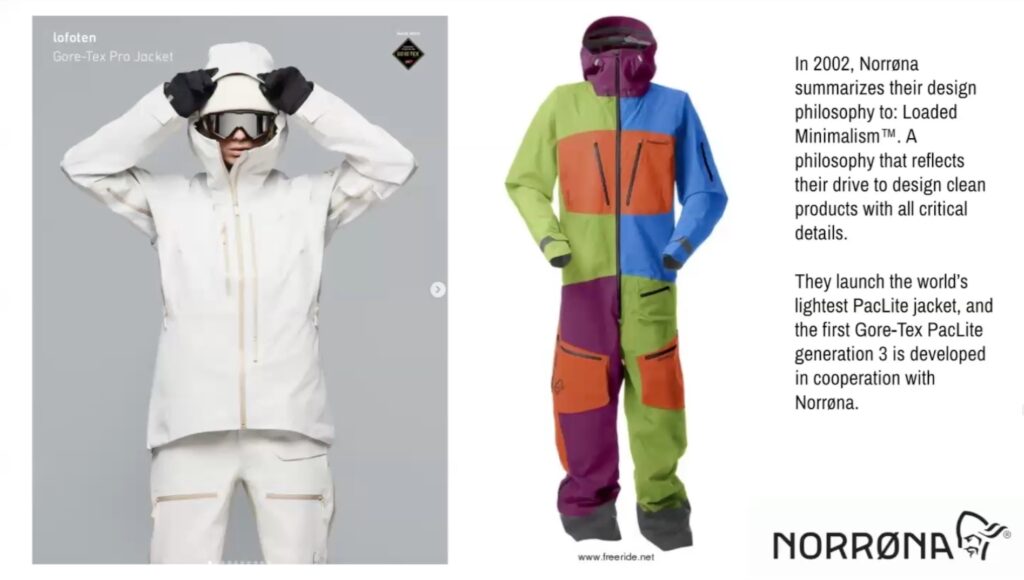
At Norrøna, she encountered a different model, one that deeply influenced her thinking. The brand’s long-standing commitment to durability and in-house repair stood out. Customers ship jackets back to Oslo from around the world to be repaired properly, and designers work side-by-side with skilled technicians. Sara emphasized how this proximity to construction and repair made her a better designer. Sustainability, she argued, is not a marketing claim but a design outcome that begins with how well a product is made, and how long it is intended to last.
2. Place, Privilege, and the Search for Meaningful Work
Despite professional success abroad, Sara described a growing sense of disconnection. Life in Oslo offered security, work-life balance, and material comfort, but it also felt insulated and, at times, isolating. She spoke about living in a “bubble of privilege” and questioning how her work contributed to the communities around her.
This unease led to a literal and symbolic departure. In 2023, Sara left her role, loaded her bike, and spent ten weeks cycling across five European countries with her dog Lucky, using the journey to slow down and reassess what mattered. Returning to Canada, she made a conscious decision to prioritize place over prestige, choosing the Kootenays not as a fallback, but as a deliberate destination. She received her teaching accreditation through the West Kootenay Teacher Education program in Nelson and then took a job at the tiny Elkford Secondary School in the East Kootenay.
Her story resonated strongly with the KORE audience because it echoed a familiar regional truth. Many makers and entrepreneurs in the Kootenays are here because they want their work to align with their lives, not dominate them. Sara framed her move not as an escape from design, but as a re-centering, a chance to integrate her skills into a community where they could have visible, local impact.
3. Teaching Repair, Building Futures
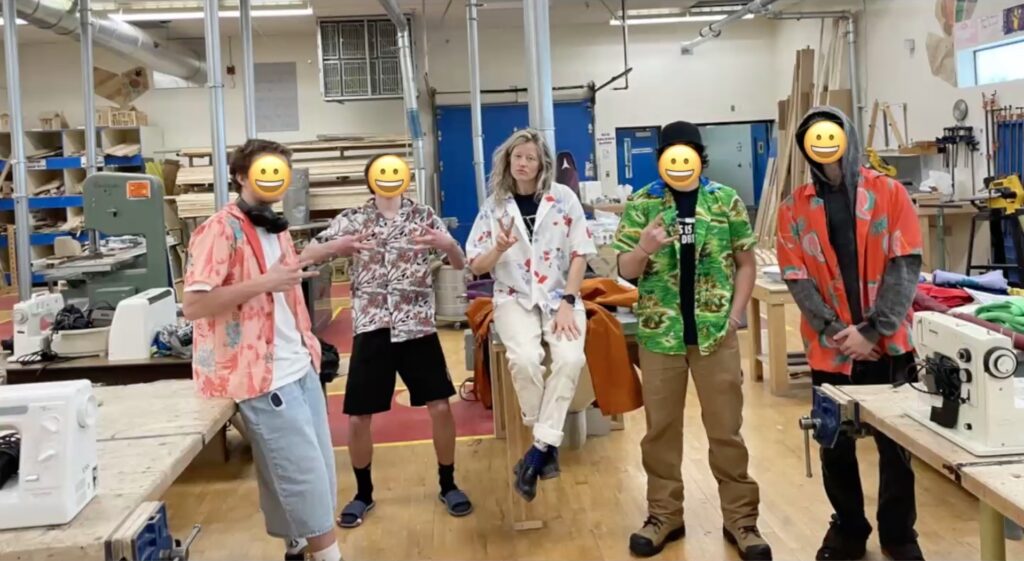
Perhaps the most inspiring part of Sara’s talk was her work inside the classroom. Upon arriving in Elkford, she discovered unused sewing machines gathering dust and a gap left by the absence of a traditional woods program. Rather than accept the limitations, she proposed a new course: Industrial Textiles.
The idea was simple and radical at the same time. Students would learn basic repair skills, explore design thinking, prototype gear based on their own outdoor interests, and test those products in the wilderness surrounding their school. Materials were sourced through donations from industry contacts, and community members were invited in to share real-world experience.
What emerged was not just a class, but a pathway. Sara shared stories of students who had never touched a sewing machine and now talk about becoming designers, or who show up to school with their own machines so they can keep building. For a rural, resource-based community, these skills represent alternatives, not replacements, to existing trades, new ways of thinking about making, fixing, and contributing.
She also highlighted the potential ripple effects of initiatives like the KORE Re-Hub Program, imagining a future where high school programs feed into regional repair hubs, technician training, and localized manufacturing. In this vision, Kootenay residents are not just consumers of outdoor gear, but active participants in its lifecycle.
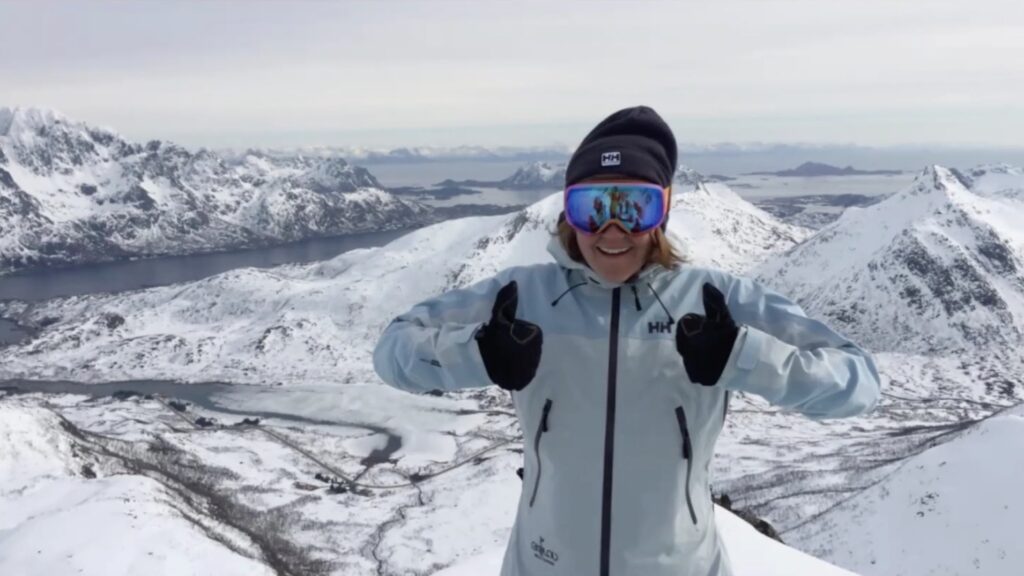
Sara Lanyon’s presentation was less about a single career change and more about redefining success in the outdoor industry. Her journey underscored the importance of durability over disposability, community over scale, and education over extraction. For KORE’s network of makers, designers, and entrepreneurs, her story offered a hopeful reminder: the future of outdoor manufacturing will be smaller, slower, and closer to home.