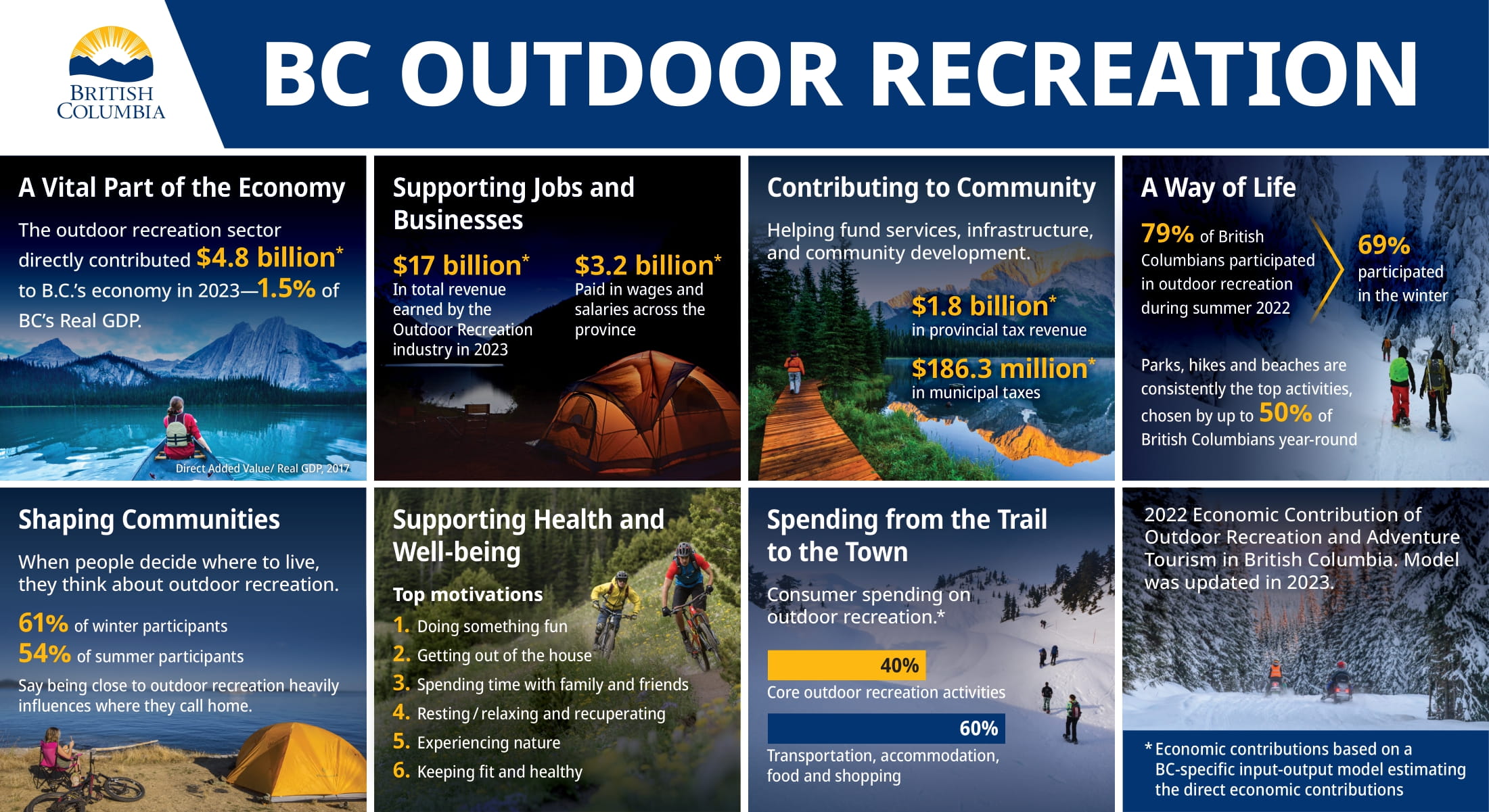
Outdoor recreation is one of British Columbia’s greatest economic engines, and nowhere is that more evident than in the province’s vast network of small manufacturers, gear designers, and adventure-driven entrepreneurs. A new provincial study, the BC Outdoor Recreation Participant Survey 2022–2023, offers the clearest picture yet of who participates in outdoor recreation, how often they get outside, what motivates them, and how recreation choices influence travel, spending, and even where people choose to live.
These findings matter deeply for BC’s outdoor recreation industry, and especially for the manufacturing sector that builds the equipment people depend on. High participation rates, strong seasonality patterns, and the huge number of “heavy users” point to a market that is growing, diversifying, and increasingly anchored in BC. Here are the six main points from the provincial study as they relate to outdoor gear manufacturers.
1. Participation in Outdoor Recreation
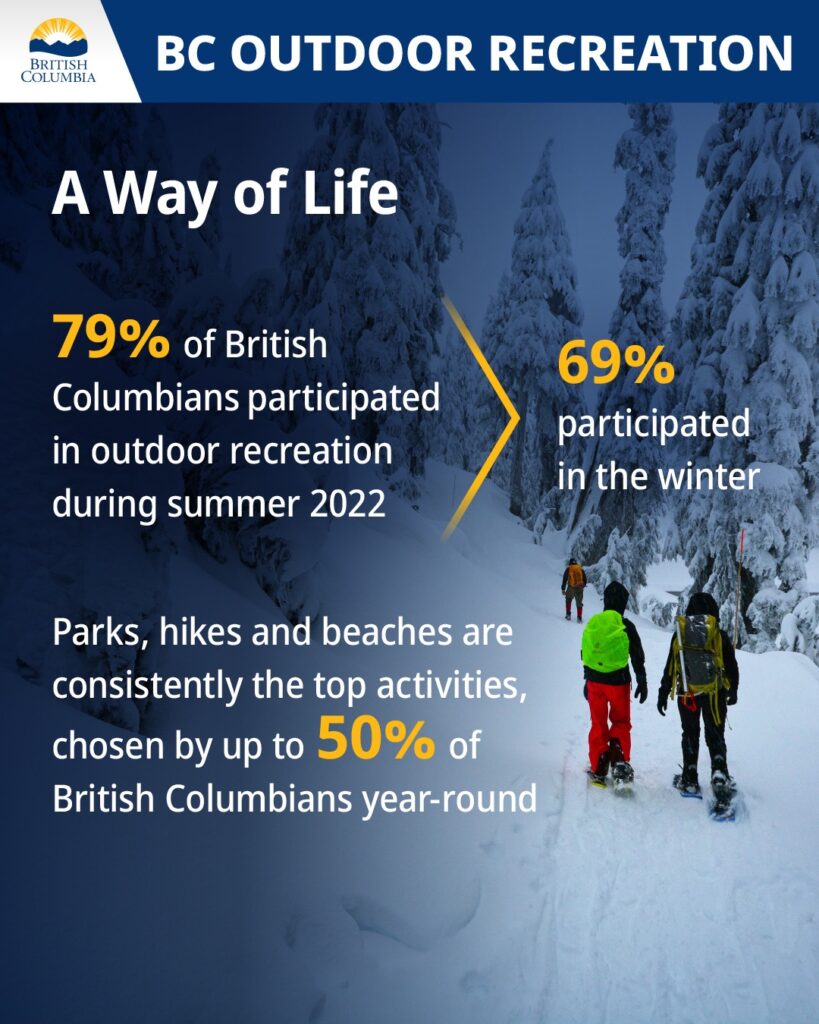
The report shows that outdoor recreation participation remains exceptionally strong across the province. Seventy-nine percent of BC residents participated in outdoor recreation during summer 2022, compared to 69 percent in the winter months. Alberta visitors posted even higher rates, with 85 percent participating in the summer and 82 percent in winter.
This seasonal drop among British Columbians underscores the importance of equipment that allows people to recreate year-round. Winter gear such as outerwear, skis, splitboards, youth gear, snowshoes, and avalanche equipment becomes essential for sustaining participation. Alberta visitors’ consistently high engagement also reinforces the demand BC manufacturers see from out-of-province recreationalists who rely on quality products made locally. The reasons people don’t participate (health limitations, cost, lack of motivation, and time) highlight long-standing challenges but also opportunities for manufacturers who design lighter, more accessible, and more affordable gear.
2. Most Popular Activities and What They Mean for Industry
Across both seasons, “soft” recreation activities dominate: park use, picnicking, day-hiking, beach activities, and lakeside swimming are consistently the top activities for BC residents and Alberta visitors alike. In summer, 50 percent of BC residents picnic or play in parks, 43 percent hike on day trips, and 42 percent participate in beach activities at rivers and lakes. In winter, hiking (35 percent), park use (38 percent), and lakeside outings (24 percent) remain top choices.
This is important for the manufacturing sector because “soft-use” outdoor activities collectively require massive amounts of gear—daypacks, sun protection, technical apparel, footwear, camping equipment, hydration systems, and accessories. These high-volume categories keep many BC gear makers busy year-round and support a steady base of domestic demand. Hard-recreation activities such as biking, skiing, paddling, and climbing also appear strongly across the data, especially among “heavy users,” suggesting that specialty equipment remains a core growth market for BC manufacturers.
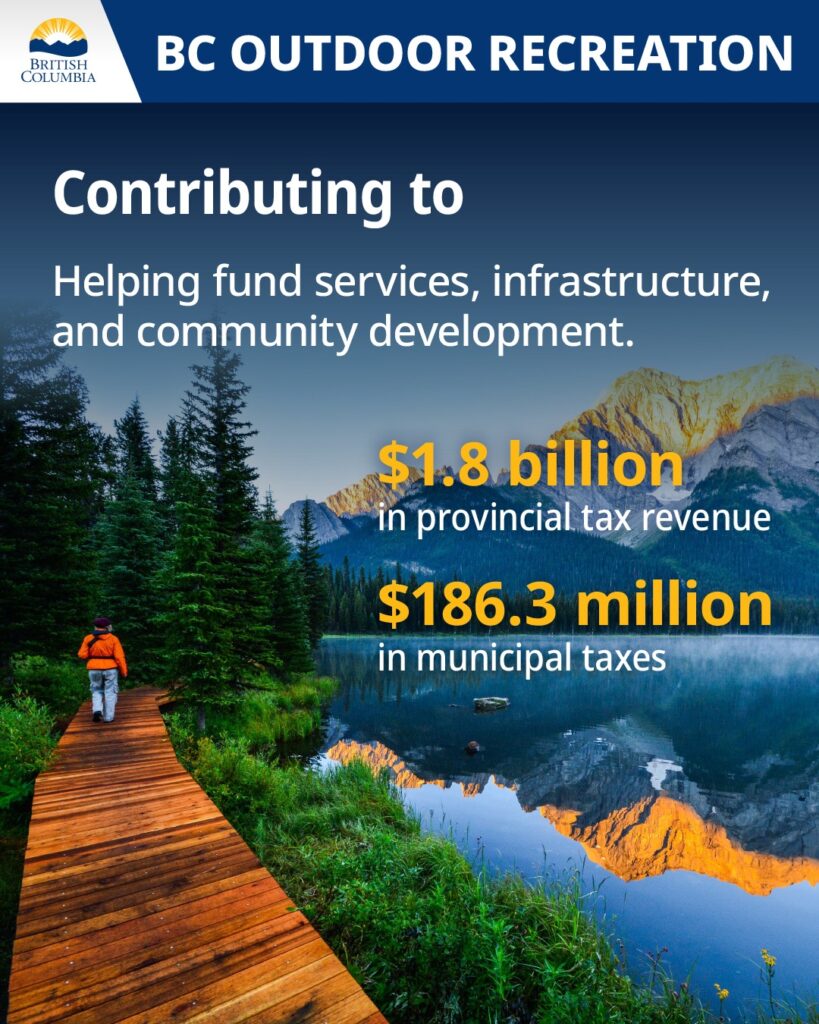
3. Land Use Trends: What Areas People Recreate In
Where people choose to recreate directly influences the types of equipment they need. The report shows that designated parks are the most frequently used land type, with 51 percent of BC summer participants and 45 percent in winter relying on them. BC Recreation Sites & Trails follow closely (41 percent summer, 39 percent winter), while other Crown land and private land are used less frequently.
Park-based recreation requires durable, carry-friendly equipment—backpacks, trail shoes, layers, compact shelters, water purification, and backcountry-ready apparel. Manufacturers in BC are uniquely positioned to outfit this type of recreation because much of their design, testing, and prototyping happens directly in these environments. The report’s detailed breakout also reveals strong use of recreation sites and trails—key spaces for mountain biking, trail running, paddling access, and backcountry travel—aligning with BC’s strengths in technical gear production.
4. Regional Differences Across British Columbia
Participation rates are relatively consistent across the province, but the Cariboo Chilcotin Coast stands out with a notably lower participation rate—69 percent in summer and 51 percent in winter. Meanwhile, regions like Northern BC and the Kootenay Rockies show some of the highest levels of “travel behaviour,” with 79 percent and 71 percent of residents respectively travelling more than 40 kilometres for summer recreation.
For gear manufacturers—especially those located in recreation-rich rural communities—this is a significant insight. High travel rates often correlate with higher gear ownership and more specialized purchasing patterns. KORE member companies in the Kootenays and Northern BC can draw confidence from the fact that their local population is among the most active and gear-dependent in the province. And in regions showing lower participation, community-based outdoor organizations
and gear makers may find opportunities to build participation through outreach, grassroots events, and entry-level gear offerings.
5. Heavy Users: A Crucial Market for BC Gear Manufacturers
One of the most relevant findings for the outdoor manufacturing sector is the profile of “heavy users”—those who take four or more trips, make at least one overnight trip, and participate in adventure tourism. In summer, 35 percent of BC participants meet this threshold; in winter, 26 percent do. Heavy users are significantly younger (35–49 percent are aged 18–34), more educated, more likely to have children, and more likely to be members of outdoor organizations. They’re also more likely to say outdoor recreation is their favourite thing to do.
Heavy users participate at far higher rates in activities that require specialized gear: 86 percent of winter heavy users engage in beach or nature activities, 85 percent in hiking/climbing/caving/equestrian activities, and 69 percent in camping or RVing. Nearly half (49 percent) ski or snowboard—more than triple the participation rate of the general population. This subgroup represents the heart of BC’s high-value gear market: committed, year-round, gear-intensive recreationalists who drive innovation, support specialty brands, and often champion BC-made equipment.
6. Social Value and Motivations: Why People Get Outside
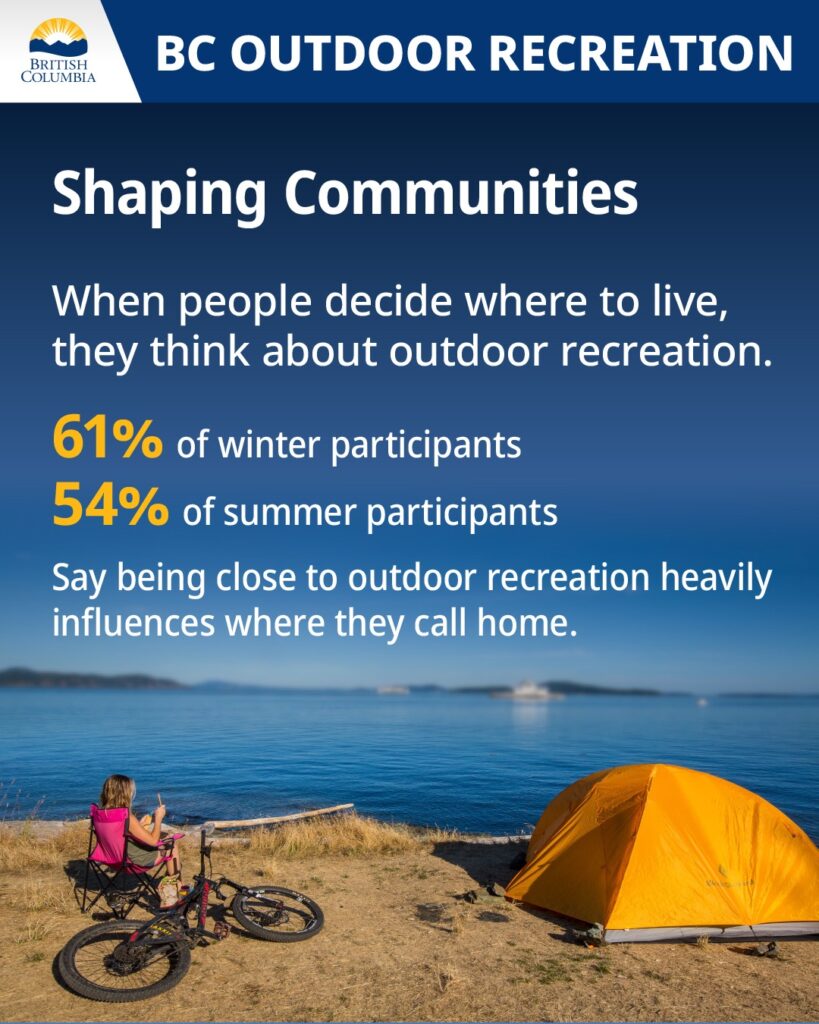
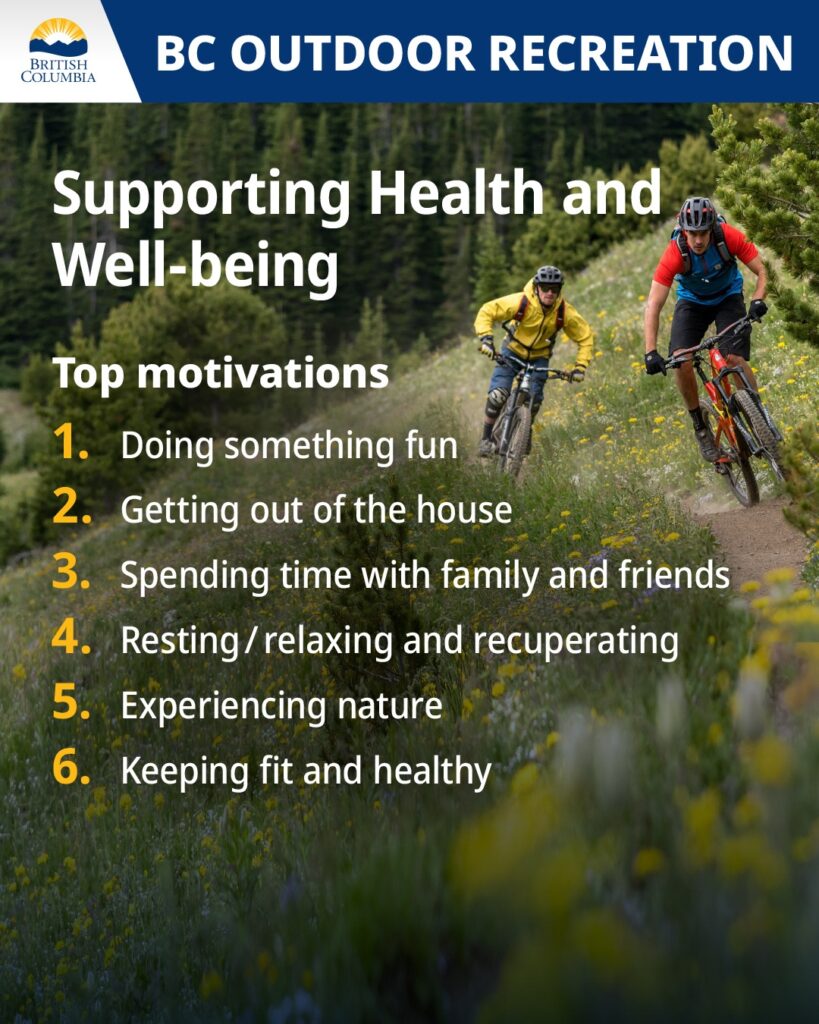
Across all demographics, people overwhelmingly participate in outdoor recreation “to do something fun” and “to get out of the house,” with both reasons scoring around 85 percent. The social value of recreation is also strong, with family and friends consistently ranked as one of the top motivators. Importantly, more than half of BC residents say proximity to outdoor recreation strongly influences where they choose to live—this rises to 61 percent among winter participants.
For the manufacturing sector, this confirms something many gear makers already know: people build their lives around outdoor recreation in BC. This deep emotional connection fuels long-term demand for well-designed, locally made equipment, supports thriving creative and technical communities, and helps anchor the sector’s growth in this province.
To download the entire report, visit the BC Government website.